2014年6月8日日曜日

mini ESGのススメ


ESGは毎週日曜10時より神田で開催していますが、この時間に集まれない人も多いのではないかと、ふと気づきました。かくいう私も京都勤務1年半になり、その間ほとんど参加できておらずもどかしい限りです。
そんなもどかしさから、京都で同じ試みを始め、開始から半年経ちましたので、その気づきを共有させていただきます。東京を離れる等、日曜朝に神田に集まれない方はご自身で始めてはいかがでしょうか。以下参考になれば幸いです。

<開催のポイント>
【人数】まずは2人仲間を集めることから
【頻度】週一回30分、一記事一本勝負
【形式】やっぱりペーパーは必要

1.       開催の人数は、3人がミニマムかなと思います。2人で始めてもいいですが、2人だと話の広がりがどうしても限られますし、相手の意見を必ず聞き取り反応しなければならないのもつらいです。3人いれば話題が広がり、ストレスも軽減されます。自分以外もう2人、周りに関心のある人を見つけて声をかければいい話ですので、まずは仲間を2人探すことからスタートしてはと思います。京都では、職場の上司と後輩の2人に声かけしました。
2.       開催の頻度は、週一回が理想です。The Economistは週刊ですし、今までの経験から一記事は30〜40分もあれば話題が尽きますから、少なくとも週一回30分どこかで集まる時間を設ければ良いわけです。京都の場合、月曜の朝始業前の7時から職場近くのスタバで行っています。
3.       開催の形式として、ペーパーは毎回作成した方が良いと思います。負担はありますが、ペーパーがないとテーマや議題の共有が難しく、しばしば議論の体を成しません。A4 半分程度のメモでかまいませんし、参加者の持ち回りで良いので、準備することをお勧めします。京都でも続けています。


周りに2人興味を持ってくれる仲間を見つけて、週1回30分集まる時間を作れれば、世界のどこにいても開催できます。ぜひ、それぞれのESGを作っていただければと思います。

2014年5月26日月曜日

超高齢社会の一風景

私には一人暮らしの祖母がいます。一人暮らしの高齢者というと、穏やかな日々、または寂しい生活を想像しがちですが、私の祖母は毎日とても忙しく過ごしています。定年に近づいてきた3人の子供達は、子育てや仕事の慌ただしさから遠ざかり時間ができたためか、なにかにつけて祖母を外へと連れ出します。8人の孫は、結婚して子供ができたのもいて、誕生日や七五三に祖母を連れ出します。私もそんな孫の一人で、たまに帰ると祖母の家に立ち寄り、食事へと連れ出します。(ごちそうをおごってもらうのですが)

そんな忙しい祖母も90歳を超えてさすがに足腰が弱ってきたようです。たまに足を痛めると外出が難儀になります。

家族間のコミュニケーションツールはもっぱら電話です。祖母も耳は良く聞こえ、頭もしっかりしているので、電話での会話は問題ないです。メールやインターネットも使えるようにならないと、とは言っていますが、携帯電話の操作もままならない機械音痴ですからさすがに難しいとも言っています。電話は私の実家にも良く掛かってきますし、まさにライフラインです。

祖母の家の向かいには床屋さんがあって、近所付き合いはそれこそ何十年にもなります。よくおかずや食材を届けてくれる気遣いに助かっています。もし祖母になにかがあったとき、真っ先に気づくのは向かいの床屋さんかも知れません。


祖母の家ではNHKが一日中ついています。時間があれば一日中NHKを観ていますから、世の中の出来事について祖母は私よりも遥かに詳しいですし、情報が早いです。朝の起床から就寝までNHKは祖母にとって時を告げる時計であり、世の中と祖母の家をつなぐ社会への窓であり、衰えぬ知的好奇心を満たしてくれる存在です。

2014年5月19日月曜日

Collective insecurity

Defending Japan
Collective insecurity
Japan’s prime minister is right to start moving the country away from pacifism.


I went to Turkey when I was 20 for exchanges with students of the country. I   happened to join a student meeting in Istanbul. At first I thought that meeting was for administration like project making but it was different. But I was surprised to find that the meeting was for discussing “war and peace” among students with almost the same ages. At that time in 2006, conflicts between Palestine and Israel were flamed up. Turkey is near from the area so they were much more serious on the issue. In the meeting, Turkish facilitator asked the guests from Japan “What do you think about peace?”

Please imagine the situation. How do you answer the question?

I chose the article because we can learn words and phrases related to defense and security. Prime minister Abe plans to allow Japan to come to the defense of its allies (collective security) for the first time. This is hot topic not only for Japan but also other countries like China, Korea and the US. We should keep in mind that you might have to explain the situation in your words.

Going back to the Turkey’s experience, I answered, “Peace is a situation that people can live in safe without any accidents or crimes.” Most Japanese might agree with this view. But reactions of Turkish students were different, like “I don’t think so” or “It’s a typical Japanese way of thinking”. For them the war was critical issue because Turkey accepted refugees from Palestine. On their mind, peace is the situation that people can live without warfare.

Today I’d like to share with you our thought of “war and peace” based on our experiences. And also I would like to know about your opinion about 

2014年5月5日月曜日

Post-office banking

Post-office banking
put your money where your mail is

Topic of the article:
l   The article is about the United States Postal Service (USPS), the second largest employer in America with a workforce of just over 491,000 in 2013. Since the rise of e-mail makes people less use postal service, USPS has to find new ways to raise revenues.
l   This article introduces a report suggesting that the post offices should begin offering financial services for the people who cannot get fully access to financial services. The simple reason is that a lot of Americans have scant access to banks and a lot of post offices have little to do.

Main support:
l   Over 1/4 American households are unbanked or underbanked, meaning that they either lack a current or savings account, or they have one but still use alternatives to banks such as cheque-cashers and payday lenders. The average households spend around 9.5% of their income on fees and interest charged by substitutes of banks.
l   High-street banks find it hard to make money serving poor customers, since they tend to have little money on deposit that banks can lend out. 
l   These customers are distressed so they need rescues from USPS. It has plenty of post offices in rural areas that already provide some financial services such as money orders and remittances to Latin American countries. That could save low-income customers the financial cost.

Oppositions:
l   Some refutes the proposal. They insist that the Government overreaches itself and USPS should cut its size. Others mention that it has zero capacity, understanding and capability of financial services and state that post offices in rural areas have limited value because financial services in rural areas are already enough and convenient.

Additional support:
l   Roughly 1 billion people in 50 countries have benefitted by their postal systems according to the Universal Postal Union, the United Nations agency that helps post arrive on time.

l   A World Bank study found last year that postal banks are likelier than conventional ones to provide accounts to those outside the financial main stream.

2014年4月28日月曜日

7-15 Free exchange / Nice work if you can get out


Free exchange / Nice work if you can get out

Discussion points
・How do you evaluate your “substitution effect” ?
・Do you think of your work as “exploit” ?

The author is talking about the change of the relationship between money and leisure by contrasting 19th century’s situation and today’s one. In the 19th century, as a British drama “Downtown abbey” showed, rich people enjoyed their leisure time almost every day while poor people worked hard and enjoyed less leisure. In today’s advanced economy however, several surveys show that overall working hours of the rich have been longer than the poor.

There are several explanations to this shift. First one is what some economists call the “substitution effect”. Higher wages makes leisure more expensive: if people take time off they give up more money. Furthermore, the “winner-takes-all” nature of modern economies may amplify the substitution effect. In the globalised market where good ideas and innovations are highly valuable, the more skilled workers could get more money.

Secondly, the author points out that the status of work and leisure in rich world has changed today so rich people tends to concentrate on their work even if they are paid enough. Work in advanced economies has become more knowledge-incentive and intellectual, whereas most jobs in 19th century were really dull ones. The writer of this column uses Veblen’s theory as an explanation. Thorstein Veblen, an American economist in 19th century argued that leisure class people who do not engaged in industry were not idle. Instead of working in industry, leisure class people engaged in what he called “exploit”: challenging and creative activities such as writhing, philanthropy and debating. The columnist states that in rich society, more people than ever can enjoy “exploit” at their office so the people can get pleasure from their work instead of leisure time in which they used to seek their satisfaction.

Lastly, the author picks up the situation of less educated workers. As low-skill and manual jobs are shrinking and as information technology are opening up a vast world of high quality and cheap home entertainment, they do not need to work as long to enjoy a reasonably satisfying leisure.

For these reasons, the columnist points out that rich people now have less leisure than the poor.

2014年4月7日月曜日

7-12 Rise of the robots


Rise of the robots
Prepare for a robot invasion. It will challenge the way people think about technology.  
from March 29th 2014 Leaders

How will robots change the way people think about technology?
Technological development can make robots not just as workers and partners but also actors that can collect information and make their decisions autonomy. When our society accepts such robots, there should be problems we have to discuss. If an accident in which robots (driverless cars for example) take part happens, who is responsible for it? If programming is fault, programmers should be blamed but what if the accident happens by the result of robot’s own decision? We have to rethink our law and regulation to be suitable for robots society where robots can be law entities. 

Summary of the article
Robots came into the world as a literacy device in science fictions and movies. But since moving from the page and screen to real life, robots have been a mild disappointment. They do some things humans cannot do themselves but still unreliable and pretty stupid.

That seems about to change given by the exponential growth in the power of silicon chips, digital sensors and high bandwidth communications. And there are other three factors (R&D, investment and imagination) into play.

R&D: New shared standard and accumulated know-how makes R&D easier.
Investment: Tech giants and venture capitalists put their money in robotic startups.
Imagination: Clever robotics application can be found in some sectors.

As consumers and citizens, people will benefit greatly from the rise of the robots. Almost all the manufacturing and services might be done by robots, so whether humanity will find new ways of using its labor or it will be forced to have leisure is worried debate among economists.


Robots can do their jobs animatedly and they also can be inhabited alongside humans, fulfilling all sorts of needs. They provoke questions such as war and drones, emotions caused by a machine and the value of labor. Robots can serve not just as workers and partners but also providers of new perspective.

2014年3月31日月曜日

7-11 Metaphycians


Combating bad science
Metaphycians
Sloppy researchers beware. A new institute has you in its sight


Ms.Kokubo’s research on STRP cells is now controversial issue in Japan. 
Researchers have to have some kind of ethics, scientific ethics in their mind. 
The people who are not engaged in research also know threats that heart the credibility of science.  

What I want to discuss:
・“Why most published research findings are false (or irreproducible)”?
・ How do you think to keep the quality of scientific research?

What the article argues:
John Ioannidis, an epidemiologist, and Steven Goodman found a new institution called METRICS. 
METRICS aims to solidify the young discipline by “meta-research”. 
Dr Ioannidis will organize conference, create a “journal watch” to monitor scientific 
publisher’s work and spread message to policy makers, government and other interested parties.

METRICS' Mission statement: 
Identifying and minimizing present threat to medical research quality 

Threat 1: Irreproducibility(再現不可能性)
No one has tried to find out whether re-run experiments have actually had any impact on credibility of research.

Threat 2: Wasted effort(無駄な努力)
Vast amount of money(over $200 billion on medical studies) was wasted on false studies never published or poorly reported.

Threat 3: Publication bias(掲載の偏見)

Not all studies that are conducted are pubilished.

2014年3月10日月曜日

7-8 Peer-to-peer lending: Banking without banks


【京都】3/10 7:00- 3名
Peer-to-peer lending: Banking without banks


新しい金融の形であるP2P lendingが既存の金融を脅かす勢いで成長しているという記事。全体としてはP2P lendingに好意的な書きぶりであり、冒頭でその成長可能性に触れられたあと、今後の課題を紹介するという内容。課題としてあげられていたのは、以下。
【知名度】既存の金融機関と比べて依然として低い
【税制】税制優遇措置や損益通算、免税制度が未整備
【規制】信頼を揺るがすような出来事を阻止する規制が必要
【保険】預金保険制度のような保険制度の創設
【国際的枠組】いくつもの国家をまたがる多数の貸し手の扱い
【預金者の平等】個人投資家と大口顧客、機関投資家間での平等
【セカンダリーマーケット】借り手と貸し手の期間ニーズミスマッチの解消


議論はそもそもビジネスとして成り立つのかという疑問から始まりました。「浮き貸し」(=金融機関の者が自分または第三者の利益をはかるため,その地位職務を利用して不正に貸し付けなどを行うこと。)にならないか、モラルハザードの問題がまず指摘されました。次に、保険制度等各種規制の枠組みを創設するのは良いが、それで儲かるのか疑問という意見もありました。また、確かに目新しいものだが、既存の融資に取って代わるというよりは、投資信託のような投資商品の選択肢の一つとしての役割が大きいのではという意見もありました。ただ、従来預金者は自分の預金が銀行の貸出に回っていくことを知りながら、自分で貸出先を選べなかったのであり、自分の預金の使い道を自分自身で「選べる」という点では大きな可能性を秘めていると感じました。

2014年3月3日月曜日

7-7 Saudi America

3/3開催報告 7:00-7:40 京都2名
“The economics of shale oil-Saudi America" from Feb 15th 2014 print edition


http://www.economist.com/news/united-states/21596553-benefits-shale-oil-are-bigger-many-americans-realise-policy-has-yet-catch

■要旨
シェールオイル等の“tight oil”ビジネスが盛り上がっている。技術革新によるtight oilの急激な生産量の拡大は、経済成長に貢献し新規雇用を生むだけでなく、世界価格の安定化に寄与する可能性がある。

安定化に寄与する理由

(1) 米国の石油輸入依存度が減ることで、米ドルと米国経済が石油価格に左右されにくくなる。
(2) シェールオイルは、通常に比べて油田が小さく枯渇スピードが速いので生産を維持するための油井の数が多い。そのため、世界価格の変動に応じた生産のコントロールがしやすい。

米国は国内の石油価格70年代から原油輸出を禁止しているが、これは原油の生産者を害し、米国が影響力のある供給者となるのを難しくしているだけである。原油輸出の解禁は米国を含めたグローバルな石油マーケットをより安定的で多様なものにし、OPECやロシアへの依存度を低くする。こうした地政学上の利益は計り知れない。


議論では、もし米国人であるとしたらあなたは輸出解禁に賛成か、日本にとっては良いことなのか、についてから始まりました。私の意見は、石油価格が下がるならばどちらの立場であれ賛成というシンプルなものです。記事ではそうした経済合理性だけでなく、原油価格の変動リスクが世界を不安定にしているという問題意識に基づいて、世界価格の安定に寄与する米国の輸出解禁を主張している点は斬新に感じました。また、記事に足りない視点として、シェールオイルの環境への影響があがりました。油井の数が多い、採掘に化学薬品を用いる、等のシェール技術の特徴は触れられていますが、それがもたらす環境への影響は全く触れられていないことに違和感を感じました。最後に日本に関わる話題としてメタンハイドレード開発に触れ、議論を終えました。

2014年2月16日日曜日

京都マラソン完走(感想)


幸運にも京都マラソンに参加することができました。人生初マラソンは、桂川や嵯峨野、広沢池などの自然を感じながら、京の都の世界遺産を巡る魅力的なコースでのデビューでした。魅力的な一方で京都マラソンのコースは高低差が大きいことも言われており、特に中間点を過ぎたところの狐坂は相当過酷な上り坂でした。私はというとろくな練習もせず、マラソンがどんなものかも分からずに参加してしまったので、ペース配分は見事に誤り、後半の競技はマラソンではなく競歩になってしまいました。ラップも見ての通り、25キロ以降にがくっとペースが下がっています。


あとになって調べてみると、これは初心者が最も陥りやすい「30キロの壁」とか「35キロの壁」と呼ばれるものらしいです。この壁の理由はいくつか考えられるらしく、(1)エネルギー切れ(2)水分不足(3)ペース配分の誤り、と言ったものが挙げられます。私の場合は、完全に(3)でした。私のような初心者は1万人を超える参加者とそれ以上に沿道に集まる応援の方々に影響されて、つい気分が高揚し、最初のペースが速くなってしまうのです。マラソンは、当初思っていたほどには心肺に負担がかかるものではなく、それもあってか最初は快調に走っていました。しかし、ペースを早めすぎると、ある時点から急激に足が動かなくなります。この感覚は面白いほど良く分かりました。それまで周りを抜かす勢いで走っていたのが、気づくと周りにどんどん抜かされていくのです。「あれ?オカシイゾ」と思った時には手遅れで、状況は悪化するばかり、ついには歩かざるを得なくなってしまいました。これはペースが速すぎると身体が「グリコーゲン切れ」になり、血中の乳酸処理のスピードが追いつかなくなり「筋肉に乳酸がたまる」状態となります。乳酸が一定をこすと、筋肉が動かなくなってしまうのです。NHKのサイトにメカニズムが紹介されていましたので、詳細を知りたい方はリンクをご覧ください。

NHK「みんなで科学 ラボラジオ」
http://www.nhk.or.jp/laboradio/report/20120716_02.html

完走後は足が全く動かず、その後の数日は散々でしたが、当日の沿道の沢山の方の応援はあたかも自分がオリンピックのような大舞台の主役となって走っているようで感動的でした。あのような感覚は、通常ごく限られたアスリートしか味わえないものですが、マラソンは市民のだれもが主役になれるスポーツです。家族を応援したり、応援されたりという姿はみていてとても微笑ましく思いました。全力で応援する側になるのもまた良いものです。かなりきつかったことは確かですが、次はしっかりと準備して挑戦したいと思いました。

2014年2月10日月曜日

7-6 Less amazing than Amazon

Walmart Less amazing than Amazon
from Print edition Feb. 1st 2014


http://www.economist.com/news/business/21595435-worlds-biggest-retailer-stumbling-its-genial-new-boss-needs-prove-he-can-push-through

2/10 7:00-8:00 京都 3名

Walmart has been in a slump in recent years and started to change their strategy.
It is at an "inflection point" and the company got a new executive, Doug McMillon.
They have started open small and medium sized stores and joined on-line market business.
Why are they forced to change their business model? What is the cause of it?

Walmart's sufferings
(1) Their international business is not thriving. It retrenched in China and Brazil.
(2) Walmart's core customers are shoppers on tight budgets, attracted by Walmart's promise of "everyday low prices".  Government raised payroll taxes and cut food stamp benefits last year, they suffered most.
(3) Amazon makes it easier to buy almost anything, supposedly more cheaply than anywhere else that  draws shoppers to Walmart's super centers. Dollar stores are its rival too.

Mr. Macmillan's "inflection"
(1) It will open more smaller stores, mainly midsize grocery stores than super centers.
(2) It starts "Walmart.com" to step up its counterattack on Amazon.
(3) It tries to make the idea of "market ecosystem" possible in its real business.
(4) It tries to change super centers to "destination stores"

We discussed
(1) What is the main causes of sales drop of Walmart?
(2) What kind of strategies Walmart should take?
(3) How do you think the future of retail business in Japan?

2014年2月2日日曜日

7-5 China loses its allure

China loses its allure
Life is getting tougher for foreign companies. Those that want to stay will have to adjust.


China is attractive consumer market for Japanese companies. It has over 1 billion people and its economy is still going to grow. Banks try to open their branches in local cities of China. Why does the economist thinks it loses its allure and what is its true meaning?

·  China was profitable market and is still the world’s most enticing.
·  But for many foreign companies, things are getting harder.
·  Competition is still heating up.
·  Some companies are leaving.
·  Staying companies are struggling.
·  Business in China is getting harder and those who want to stay need to adjust
Situations
 Effective strategies
・Growth is weakening
 ・Shift from going for growth to enhance productivity
・Costs are rising
 ・Tighten control of executives behavior and safety standards
・Talented are limited
 ・Localize marketing and product development.
・Pay is soaring


Discussion topics
·      Has China’s gold rush really been over?
·      If you guide foreign companies in Japanese market, what instructions are possible?
·      Plus: How many global companies or brands do you already know in this article?


【総括】
・ 消費意欲旺盛な中国は、市場としての魅力を失っていないながらも、取り巻く状況は変化しており、外国企業にとっての「ゴールドラッシュ」の時期はピークを過ぎた感がある。その中で、まだ挑戦していこうと考える企業はどのように中国市場へ適応すべきかをまとめた記事。記事ではその方法として、(1)拡大を目指すのではなく生産効率を目指す方へシフトすべき(2)経営者のふるまいや安全基準に対する統制をより強化すべき(3)一つの中国という考えを捨て、マーケティングや製品開発をローカライズすべき、といった点を挙げています。

・ 最初の論点は、果たして本当に中国は魅力を失っているかという点。10億人以上の人口を抱え、経済も成長途上にある中で、そうした状況の変化は一過性のものであって、まだまだ魅力は失われていないのではないかという反論が想定されます。議論は、確かに中国ビジネスは難しい、という肯定からスタートしました。政府の力が大きい国でメディアも政府の意向が反映され、一度批判を受けると大キャンペーンが張られビジネスの継続が困難となるという状況です。別の記事では中国の消費者の気の移り変わりの早さ(定番がすぐに陳腐化する)も指摘されており、国内企業との競争も考えれば、中国は外国企業に取って益々難しい市場であるという指摘は説得力があります。一方で、業界によって状況は異なっていて、一括りには出来ないのではという意見もありました。

・ 次の論点は、記事の提示した3つの戦略についてです。日本より製品やサービスの品質に無頓着のように思える中国において「レピュテーショナルリスク」を指摘したのは目新しいという意見や、「一つの中国」という考えを捨てることは賛成だ、中国は沿岸部と地方で全く異なり、地方の都市も言語すら異なるのだから、という意見が出されました。これらの戦略は日本に当てはまるかという論点については、そもそも縮小傾向にあり国内企業が独占している日本市場は外国企業にとって魅力的ではないのではないか、日本が四半世紀前にたどってきた道のりに中国はあるのではという指摘が出されました。

【感想】
・ 中国は世界第二位の経済規模をもつ隣国である以上、様々な困難があるとはいえ、ビジネスにおいても無視することは出来ない国であることは間違いありません。それは、日本の経営者にとってだけでなくThe Economist誌の主要読者である米国、欧州各地の企業経営者にとっても同じことです。そのため、中国において外国企業はどのようにふるまうべきか、は世界の主要な関心事でありトップ記事として扱うのは納得できます。

・ そうした中、China loses its allure(中国は魅力を失いつつある)という記事のタイトルは、記事の本旨と若干ずれているように感じました。私の印象は、「中国は困難だが捨てがたい」というものです。むしろ記事の狙いは中国は魅力的かどうかではなく、「豊富な労働者と消費者に支えられている」「中国はカネさえ出せば、経営者の横暴も粗悪製品も許される」「中国は共産党政権下でひとつにまとまっている」といったステレオタイプな見方を払拭することにあるように思えます。その意味では、「中国とはどのような国なのか」という問いへの一つの回答であると感じました。


2014年1月27日月曜日

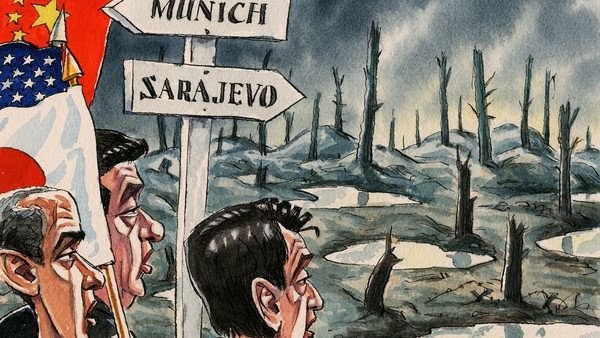
7-4 Time to think more about Sarajevo, less about Munich from FT


Time to think more about Sarajevo, less about Munich 
from FT By Gideon Rachman


【京都】開催報告
1/27 7:00-8:00 3名

ダボス会議での首相発言が話題を呼んだこともあり、改めて取り上げてみました。記事の内容は説得力のあるものですが、それでも尚、ことに日中関係となると首相の強硬姿勢が一定の支持を受けているのは事実です。「サラエボの教訓」に学び自国のナショナリズムを抑えるか、「ミュンヘンの教訓」に学び台頭する中国を強硬姿勢で牽制するか、必ずしも相反する教訓ではないですが、現在の冷えきった日中関係を鑑みれば、自制心をもち冷静にことに取り組むべきで「サラエボの教訓」から得ることの方が大きいと感じます。


記事の内容は友人の村上君が簡潔にまとめてくれているので共有しておきます。

----転載----
百年前の英国を今日の米国に、ドイツを中国に、フランスを日本に置き換えている点はEconomistと同様ですが、特徴的なのはWWIのサラエボ事件とWWIIのミュンヘン会談という各戦争につながった外交危機から得られる教訓を対比している点です(記事のタイトルは「Time to think more about Sarajevo, less about Munich」)。

“WWIサラエボの教訓”…各国が戦争回避のために本気で知力を尽くさなかったために戦争に流されてしまった(→一歩引き下がる勇気を持って、戦争回避のための冷静な行動をとるべき)
“WWIIミュンヘンの教訓”…ドイツの伸張に対し強硬姿勢を取らなかったために後に大きな戦いに発展してしまった(→対抗勢力対しては武力行使を含む強硬姿勢で臨み、封じ込めを図るべき)

“サラエボの教訓”はキューバ危機で活かされた。一方、“ミュンヘンの教訓”はスエズ危機やベトナム戦争、イラク戦争での武力行使の理由付けに利用されたがいずれも失敗に終わった、と指摘しています。

今日の中国と周辺諸国間での緊張の高まりに対して、各国は“ミュンヘンの教訓”をもって対応しようとしているように見えるが、ここは“サラエボの教訓”で対処すべき局面。弱さを見せまいと頑なな態度をとるばかりではなく、勇気を持って衝突を避ける姿勢を持たなければ、フランス・ロシアとの同盟関係ゆえに大戦に引きずり込まれた英国と同様に、米国も日本との同盟関係のために戦禍に巻き込まれかねない、と記事は警鐘を鳴らしています。
----転載終----

この節目の年に100年の現代史を振り返るのは面白いと思います。100年というタイムスパンは絶妙です。100年前の出来事を肌で知っている人はこの地球上にほぼいません。あと10年もすれば、地球上に誰もいなくなります。あっという間に人類の記憶からは亡くなってしまうのです。100年の節目というのはその出来事を身近なものとして真剣に振り返る最後の機会であるかもしれません。この機会を大切にしたいと思います。

2014年1月20日月曜日

7-3 Of bongs and bureaucrats


Of bongs and bureaucrats
from Jan. 11th 2014 edition 

【京都】開催報告
1/20 7:00-8:00 3名

記事の背景
The first recreational marijuana shops opened in Colorado on January 1st without any troubles.
The Economist has opposed drug prohibition since 1993. It argues that Marijuana should be legalized, taxed and regulated.

記事の主張
The economist’s position of drug legalization is going to be accepted. So how the government should regulate and tax marijuana is at issue. Too little research has been done on the extent of harm it can do but the information is important to set level of tax rate. Although there are some issues on regulation and taxation, legal marijuana will do less harm than prohibition.

私の意見
This argument sounds too liberal for me. This opinion turns to be reasonable only if marijuana is less harmful than alcohol and tobacco. When we compare these, we should compare not only influences on our body but also social order or virtue.